Showing posts with label Cork. Show all posts

Wednesday, 15 July 2026

Irish in France in WW2 - RTÉ Brainstorm article

For Bastille Day this year, I thought I'd write something about the Irish who gave assistance to France during the Second World War. Some of those who risked their lives as volunteers in the Resistance are well known (like Samuel Beckett) or those who helped out through humanitarian initiatives (like Mary Elmes), but others will not be that familiar to you. Read it here on the RTÉ Brainstorm website.

Samuel Beckett. Image source.

The French Resistance carried out a range of activities including non-violent civil defiance and organised guerilla warfare. They ran underground newspapers and gathered intelligence. It is estimated that between 1 and 3% of the French people took part in the Resistance. Find out more about it here and here

Many of the Irish who took part in Resistance activity in France did so as members of the British Special Operations Executive (SOE). This was an organisation set up in July 1940 at the instruction of Winston Churchill to help local resistance movements and carry out espionage and sabotage in enemy held territories. You can find out more about the SOE here. According to this article, only 39 women were selected to be part of the SOE Section F or French section. This article by David Murphy contains a good precis of the Irish were part of Section F.

One of those who helped by giving assistance and giving hope was Cork-born Mary Elmes (1908-2002), who carried out essential humanitarian work in France during the War. She helped set up and run refugee camps for people fleeing Franco's nationalist forces in Spain. She provided education for the children in the camps and helped hundreds of Jewish children avoid certain death at Auschwitz concentration camp. She is remembered in her native city with a new pedestrian bridge bearing her name.

Mary Elmes Bridge in Cork city.

Wednesday, 25 February 2026

WW1 Memorial Cross in Ieper/Ypres Belgium - RTÉ Brainstorm article

A tall stone Celtic Cross in the Belgian city of Ieper (Ypres) commemorates men from Cork in Ireland who died there during the First World War. I have just written a short article about the history of the cross for the RTÉ Brainstorm website. Read it here.

 
Photograph of the memorial with the cathedral in the background.

Ieper, known as Ypres during the War, was held by the forces of the Allied Powers right throughout the War. The cost of holding this strategic location was high for the Allies as well as the Central Powers (Germany, Austria-Hungary and the Ottoman Empire). Many hundreds of thousands died during the Three Battles of Ypres in 1914, 1915 and 1917.  

 
Photograph of the memorial showing a carving to represent the crest of Munster (three crowns) with some Celtic knot motif on the bottom.

After the War, Ieper was seen as 'holy ground' by ex-servicemen on account of all the lives lost there during the War and the near utter destruction of the town. I have previously written about the destruction and rebuilding of the town here. The memorial cross was unveiled in 1924 and by that stage, Ireland had gained its independence from Britain. 

The sacrifice of the Irishmen who fought in the British army during the War was remembered by their family and the community they came from. However, with independence came a fresh perspective on the Irish who fought and died during the War. 

 
Photograph showing the detailed carving of the Celtic motif on the shaft of the cross.

This article by Fionnuala Walsh on the 1914-1918 Online Encyclopedia covers how the attitude of Irish people to the War evolved over the years. This article by Edward Madigan deals with how the centenary of the War was marked in Ireland and how this provided a chance to look back on that period with a more objective outlook. The renewed interest in the story of the Irishmen who fought in the War that was prompted by events such as the Decade of Centenaries can be seen in the renewed links between Cork City Council and Ieper City Council that I mention in the Brainstorm piece. 

Friday, 28 March 2025

SOFEIR conference in University College Cork (UCC)

The 2025 SOFEIR (Société Française d'Études Irlandaises / French Society of Irish Studies) conference was held in University College Cork on 21-22 March 2025. SOFEIR was founded in Rennes in 1981 and brings together academics who work in the broad interdisciplinary field of Irish studies in France. This was (I think) the second time that the conference was held in Ireland.

The theme for the conference was 'Ireland and Transnational Solidarities'. Academics and researchers came from Ireland, France and the UK to present papers on various topics from Palestine, Algeria and India to herbal medicine, Irish literature and surfing. 

 
Getting the Dr Dora Allman room in the Hub ready for the conference.

I delivered a paper on Etiennette Beuque (d. 1949), a Frenchwoman who wrote numerous books on Ireland in the 1920s and 1930s. She became interested in Ireland around the time of the push for Irish independence 100 years ago. Her books focused on Irish history and contemporary Irish politics. She also wrote poetry and a couple of books of fiction based on Ireland (particularly the Terence MacSwiney hunger strike and the Easter Rising).


The photograph above shows a packed audience listening to Prof Dónal Hassett deliver a keynote speech on the experience of Irish peasants who were sent to set up home in French controlled Algeria in the 1800s. It ended in disaster and the Irish people that went there eventually made their way back to Ireland.

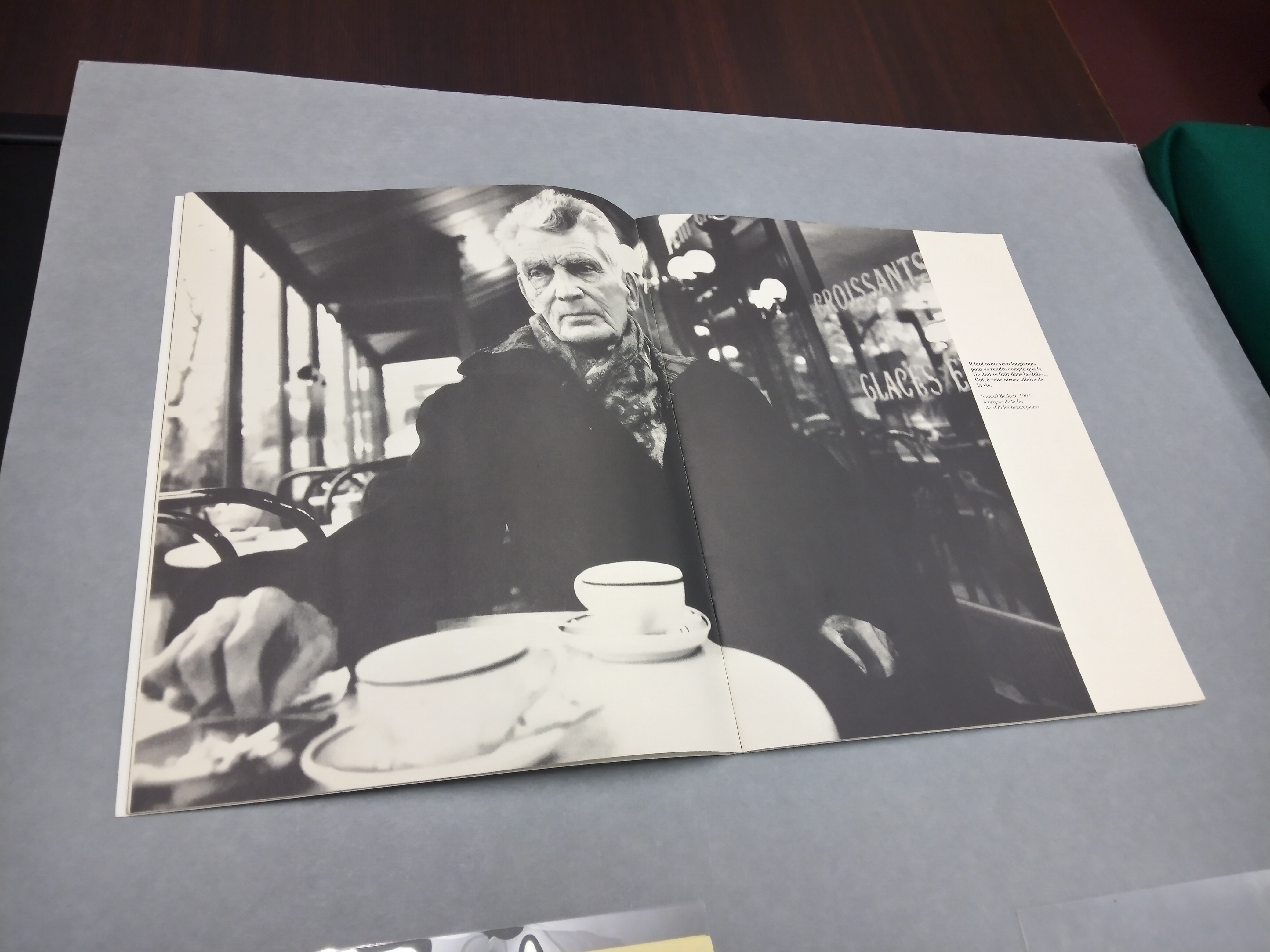
A library exhibition was organised by Prof Patrick O'Donovan (Dept. of French, UCC) and Luke Watson (School of History, UCC) to run alongside the conference in the UCC Boole Library. Entitled 'Ireland and France: Transnational Nations', conference attendees were able to view the exhibition during the conference. It included a wide range of exhibits from the library's holdings. Below are some examples of the kind of material (a French map of Ireland and a photograph of Samuel Beckett in Paris) that was on display as part of the exhibition.

Friday, 1 November 2024

PhD Conferring University College Cork

I was delighted to attend the College of Arts, Celtic Studies and Social Sciences conferring in University College Cork recently where I was conferred with a PhD. 

It was not an easy road and took a lot of effort but I am pleased to have reached this point. I could not have done it alone and therefore, would like to thank everyone who helped me to achieve this goal including friends, family, students, colleagues, supervisors and examiners.

 
Standing in the stone corridor of the north wing of the UCC quadrangle.
 
Receiving the PhD parchment from the President of UCC Prof. John O'Halloran at the conferring ceremony.

Thursday, 5 September 2024

Everyman Theatre Cork - an Irish Diary

The Everyman Theatre in Cork is one of the city's most important cultural hotspots. It has a long history and I have just written an Irish Diary in the Irish Times newspaper looking at that rich history. Read it here.

 
Interior of the Everyman Theatre, Cork. Image source.

The theatre was opened in 1897 and operated as a variety theatre initially. These were very popular at the time and touring artists would go from theatre to theatre around Britain and Ireland. Film has played an important role in the building's history. A short film was shown on the opening night and the building served as a cinema for decades after the theatre closed. It became a theatre again when the Everyman Playhouse took it over at the start of the 1990s. There's a video here on the RTÉ Archives website of the Playhouse in 1974.

The Everyman Playhouse had been based in the CYMS Hall and the Father Mathew Hall. It was a big undertaking to be moving to such a big 900-seat venue but as Dan Donovan says in his biography Ward Anderson, the owners of the Palace Cinema, sold the building for £120,000, payable at £10,000 per annum. There's a video here from March 1990 on the re-opening of the theatre. 

 Some of the Everyman directors were worried that it was too big and too dilapidated but a lot work has been put into the building over the years and it is now in the best shape it has been since it opened almost 130 years ago. Long may it continue.

Monday, 26 February 2024

An Irish Diary on the Saga ship (shipwreck off Cork coast 1895)

Almost 130 years ago, a Swedish merchant ship got into difficulty when sailing from Europe to South America. After losing its rudder in a storm in the English Channel, it came aground in Cork in the south of Ireland in February 1895. I have just written an Irish Diary about the ship known as the Saga in the Irish Times newspaper. Read it here.

 
Drawing of the Saga. Image source.

The story of what happened to the Saga and its Swedish crew was not fully known until recent years when the ship's anchor was recovered and some investigation was done into what happened. The anchor is now on display at Ballybrannigan beach in East Cork close to where the ship ran aground.  

Beside the anchor on the beach is an information board in English and Irish telling the story of what happened the Saga. Included on the board is a list of the crew that were on board when it ran into difficulty after being battered by the storm in the English Channel. 

This is a list of the crew that were on board the Saga. This information was obtained from the Oskarshamnssjöfart website. 

  • Kapten [Captain] Lorentz Peter Sjöstrand, född [born] 1856 i Ålem
  • Styrman [Mate] Johan Martin Hansson, född 1864 [born] i Falsterbo
  • Konstapel [Constable] Frans Oskar Karlsson, född [born] 1870 i Mönsterås
  • Matros [Able seaman] Karl Viktor Johansson, född [born] 1869 i Mönsterås
  • Lättmatros [Seaman] Klas Viktor Danielsson, född [born] 1873 i Fliseryd
  • Lättmatros [Seaman] Uno Rudolf Johansson, född [born] 1874 i Fliseryd
  • Lättmatros [Seaman] Per Oskar Leonard Svensson, född [born] 1877 i Ryssby
  • Jungman [Deckhand] Josef Edvin Gottfrid Gustafsson, född [born] 1878 i Häreda
  • Kock [Cook] Ernst Herman Pettersson, född [born] 1876 i Oskarshamn


Anchor from the Saga at the carpark at Ballybrannigan beach, Cork, Ireland.

Monday, 27 November 2023

An Irish Diary on Trams in Cork

There is a plan in place to reintroduce trams to Cork city in Ireland. The one line is planned to run from Ballincollig in the west of the city to Mahon Point in the east, with stops at MTU, CUH, UCC and Kent Station. Find out more about the new scheme here

Trams were last used as a means of public transport in Cork over 90 years ago. They ended in 1931 when buses took over as the main means of public transport in the city. I have just written a Diary about the story of Cork's trams in today's Irish Times. Read it here.

 
Colorised photograph of a tram in Douglas, Cork 1910. Image source.

 
Map of the 1898 electric tram scheme.

As I mentioned in my article, there were two tram schemes in Cork in the past. The first was horse-drawn and last for just a few short years. There is some information about it here together with photographs of the trams and horses. 

The second tram scheme was electric and ran for over 30 years. There is information about it here together with some photographs. 

You can watch the Mitchell and Kenyon film from 1902 showing a tram in Cork city here.

If you would like to find out more about the history of trams in Cork - there is a book on the topic called Tram Tracks Through Cork: An Illustrated History by Walter McGrath. 

Tuesday, 29 August 2023

An Irishman's Diary on the Cork International Exhibition 1902/03

The Cork International Exhibition was a massive undertaking and turned out to be a great success. Opened on 1 May 1902, it attracted nearly 2 million visitors. I have just written an Irishman's Diary about the Exhibition in the Irish Times newspaper. Read it here.

 
Exhibition catalogue, on display in the Cork Public Museum.

Over 500 exhibitors showed off their wares at the Exhibition when it opened in 1902. As I say in the article, it was deemed to have been such a success that it was decided to re-open it in May of the following year as the Greater Cork International Exhibition. 

Most of the buildings and structures erected for the Exhibition were taken down immediately following the end of the 1903 Exhibition or in the decades following. Two buildings that have remained are the Shrubberies House (now Cork Public Museum), which was used as an administration center during the Exhibition and the small President and Lord Mayor's Pavilion (now used as an art gallery).

 
The Shrubberies (Cork Public Museum)


The President and Lord Mayor's Pavilion (now art gallery).
 
The previous exhibitions to take place in Cork were on a much smaller scale. The First Irish Industrial Exhibition Cork 1852 took place in a building where the Cork City Hall now stands. Here you can view a map of Cork from the time to get an idea of what the city looked like back then.

If you are interested in the 1883 Irish Industrial and Fine Art Exhibition that took place in Cork, you can view and download the catalogue here from the Cork Public Museum.

Friday, 23 June 2023

Bloomsday in Cork - 16 June

The 16th of June is now celebrated around the world every year as 'Bloomsday'. It marks the day that Leopold Bloom, the fictional character in James Joyce's modernist novel Ulysses, wandered through the streets of Dublin city. 

 
Signpost in Nano Nagle Place.

 
Bloomsday Conference, Nano Nagle Place, Cork, 17 June 2023.

This year, for the first time in many years, an event was held in Cork. Organised by the Joycean scholar, Dr Flicka Small, it took place in Nano Nagle Place. It is fitting that an event was held in Cork, as it is the birthplace of James Joyce's father, John Stanislaus Joyce (1849-1931). It is also fitting that it took place in Nano Nagle Place, as Joyce's maternal grandmother (Ellen O'Connell) and her sister (Alicia) were educated in the South Presentation Convent (now Nano Nagle Place). You can read about this and the other links between Joyce and Nano Nagle Place here.

Speakers at the conference came from all over Ireland to talk about James Joyce, Cork, the Joyce family and of course, Ulysses. Local historians and residents of the South Parish, where James Joyce's father was born, discussed the history of the Joyce family in Cork.

 
Garden in Nano Nagle Place, Cork.

Other events held in Cork this year to mark Bloomsday include a presentation in the Crawford Art Gallery of the work of the artist Angie Shanahan and a discussion with Dr Flicka Small about art in Joyce. In the Cork City Library, former Irish diplomat, Daniel Mulhall, read from his book about Ulysses and from Ulysses itself.

Well done to all involved in the Cork Bloomsday 23 events. Looking forward to next year's Bloomsday already.

Monday, 31 October 2022

An Irishman's Diary on Henry Ford's Irish connections

The founder of the Ford Motor Company, Henry Ford (1863-1947), visited the south of Ireland in 1912. It was a sort of homecoming because his father, William Ford (1826-1905), was born in County Cork. He emigrated to America in 1847. Read my Irishman's Diary in today's Irish Times newspaper to find out more. See it here.

https://live.staticflickr.com/4673/40142594912_956c497669_b.jpg 

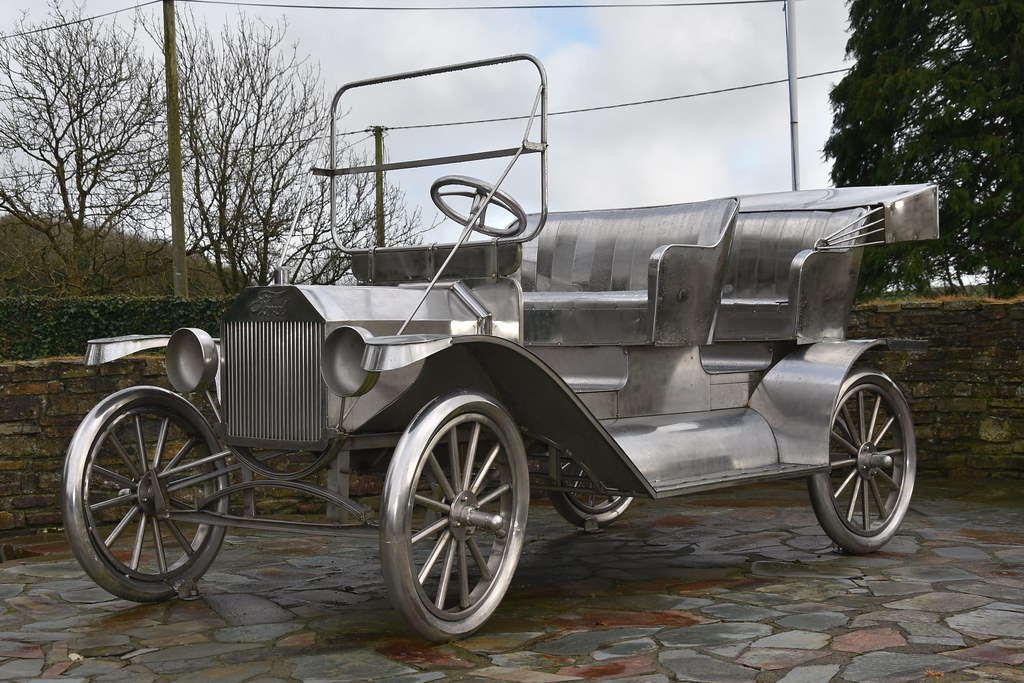
A life size replica of a Ford Model T in Ballinascarthy, Co. Cork, Ireland. Image source

The Ford plant in the Marina in Cork opened in 1919 and employed many thousands over the years. It eventually closed in 1984 with the loss of 800 jobs but the building still remains even if it is used for other purposes these days. You can get a glimpse of it when things were in full flow on the Henry Ford website. See it here. This site has other interesting items linked to Henry Ford and Ireland, such as maps of where William Ford came from and photographs of people working at the Marina plant over the years.

If you are interested in the history of Ford in Ireland, there is a good short article by Dr Leanne Blaney, entitled 'When Ford Motors Came to Cork', on the Century Ireland website. Read it here.  

There is also a PhD thesis by Dr Thomas Grimes, completed at NUI Maynooth, entitled 'Starting Ireland on the Road to Industry: Henry Ford in Cork'. Read it here

Sunday, 21 August 2022

Michael Collins in the French press - Aug. 1922

Below is a selection of front page articles from the French press on the death of Michael Collins (1890-1922) on 22 August 1922. It took time for the news to reach the Paris newsrooms so they are all from 24 August 1922. Most of the papers got their reports from news agencies or their London correspondent.


'Yet another crime in Ireland - Mr Michael Collins (head of the Irish Provisional Government) has been killed'. Le Radical, 24 Aug 1922. Source


'Mr Michael Collins (head of the Irish Provisional Government) was killed by the rebels in an ambush'. Le Petit Parisien, 24 Aug 1922. Source


'Michael Collins (head of Ireland's Provisional Government) has been killed in an ambush'. L'Oeuvre, 24 Aug 1922. Source


'Michael Collins, head of the Irish Free State, was killed by the insurgents in an ambush, his former brothers in arms'. Le Journal, 24 Aug 1922. Source


'General Michael Collins head of the Free State was killed in an ambush'. La Lanterne, 24 Aug 1922. Source 


'Irish Civil War. Mr Michael Collins, head of the Provisional Government has been killed'. La Liberté, 24 Aug 1922. Source


'General Michael Collins, prime minister of the Free State, is killed by the insurgents'. Le Matin, 24 Aug 1922. Source


'Mr Michael Collins dies in an ambush'. L'Humanité, 24 Aug 1922. Source


'The new Irish leader is killed in an ambush'. L'Instransigeant, 24 Aug 1922. Source


'After Mr Griffith, Mr Collins - Government leader killed'. La Croix, 24 Aug 1922. Source


'The President of the Irish Republic is killed in an ambush'. L'Echo d'Alger, 24 Aug 1922. Source 


'Mr Collins, head of the Irish government, is killed in an ambush'. L'Echo de Paris, 24 Aug 1922. Source 


'Mr Michael Collins has been killed'. Excelsior, 24 Aug 1922. Source