Thursday, 10 August 2023

An Irishman's Diary on Paddy Joyce - actor and nephew of James Joyce

The actor Paddy Joyce (1923-2000) was a nephew of the writer James Joyce (1882-1941). Born in Trieste in 1923 and brought up in Dublin by his Irish mother, Paddy treaded the boards in Dublin, London and other European capitals. 

He acted in several big budget movies and played parts in a variety of popular television programmes on British TV. I have just written an Irishman's Diary in the Irish Times newspaper about Paddy Joyce. Read it here.

Paddy Joyce. Image source.

After acting in school plays while still a student at Belvedere College (alma mater of his famous uncle James Joyce), Paddy joined singing and acting groups in Dublin. He toured with several of these groups, visiting countries in Europe and north America before trying his luck in London. His list of credits is impressive with the likes of Eastenders, Coronation Street and Z Cars appearing among the list. He also played roles in Father Ted, Auf Wiedersehen Pet, and The Bill.

I first heard about Paddy Joyce at this year's Bloomsday celebrations in Cork. One of James Joyce's grand nephews, who attended the Bloomsday conference (which was organised by Dr Flicka Small), mentioned that Paddy was a nephew of James Joyce and that Paddy had enjoyed a successful acting career. Curious to know more, I did a little digging and my newspaper article is the fruit of that research.

Friday, 23 June 2023

Bloomsday in Cork - 16 June

The 16th of June is now celebrated around the world every year as 'Bloomsday'. It marks the day that Leopold Bloom, the fictional character in James Joyce's modernist novel Ulysses, wandered through the streets of Dublin city. 

 
Signpost in Nano Nagle Place.

 
Bloomsday Conference, Nano Nagle Place, Cork, 17 June 2023.

This year, for the first time in many years, an event was held in Cork. Organised by the Joycean scholar, Dr Flicka Small, it took place in Nano Nagle Place. It is fitting that an event was held in Cork, as it is the birthplace of James Joyce's father, John Stanislaus Joyce (1849-1931). It is also fitting that it took place in Nano Nagle Place, as Joyce's maternal grandmother (Ellen O'Connell) and her sister (Alicia) were educated in the South Presentation Convent (now Nano Nagle Place). You can read about this and the other links between Joyce and Nano Nagle Place here.

Speakers at the conference came from all over Ireland to talk about James Joyce, Cork, the Joyce family and of course, Ulysses. Local historians and residents of the South Parish, where James Joyce's father was born, discussed the history of the Joyce family in Cork.

 
Garden in Nano Nagle Place, Cork.

Other events held in Cork this year to mark Bloomsday include a presentation in the Crawford Art Gallery of the work of the artist Angie Shanahan and a discussion with Dr Flicka Small about art in Joyce. In the Cork City Library, former Irish diplomat, Daniel Mulhall, read from his book about Ulysses and from Ulysses itself.

Well done to all involved in the Cork Bloomsday 23 events. Looking forward to next year's Bloomsday already.

Monday, 19 June 2023

The French Festival, Dublin 1962 - An Irishman's Diary

The French Festival took place in Dublin from 26 April to 8 May 1962. It was a cultural and industrial showcase put on by the French authorities to win hearts and minds (and perhaps wallets as well) in Ireland. I have just written an Irishman's Diary about it in the Irish Times newspaper. Read it here.

Photograph of Taoiseach Seán Lemass cutting the ribbon to open the French Festival at the Mansion House, Dublin, 26 April 1962.

The Festival was opened by Seán Lemass and he said that he hoped that it would renew the old ties that existed between the two countries. It took place in an Ireland very different from today's Ireland. The Festival was covered extensively in the Irish press as if it was something of immense importance. France was portrayed as an exotic land full of haute couture and fine dining (common stereotypes at the time I suppose, although they still be valid to this day, depending on who you ask). As mentioned in my article, the one dissenting voice was in the Cork Examiner. On the same day that the 'Dublin Letter' appeared saying that the French had come to Dublin in search of "more business", the editorial discussed the state of French politics in light of the Algerian War, which came to an end in March 1962.

The writer of the Irishman's Diary at the time, Quidnunc, labelled it a "whirlimagig" - probably due to the amount of events and variety of events that took place during the fortnight. As well as the formal events in the Mansion House and the Building Center on Lower Baggot Street, the French film Archimède, le clochard [The Tramp], starring Jean Gabin (1904-1976), was shown in the Ambassador Cinema at the top of O'Connell Street. 

A French frigate, Commandant Rivière, spent a week at the quayside in Dublin. Its crew entertained on board and were brought on a tour of the Guinness brewery. They also played a football match with Irish soldiers and there was a dinner arranged for them at MacKee barracks, which was attended by the Chief of Staff of the Irish Defense Forces. 

A French policeman directing traffic on Baggot Street with a Garda during the French Fesitval.

Over forty cases of cheese were flown in for the fortnight and they were sold in shops and restaurants around Dublin. A shop on Chatham Street, the Farm Produce Co., advertised that it was selling Brie and Camembert as well as the not so common varieties Saint-Paulin and La Grappe.

Monday, 22 May 2023

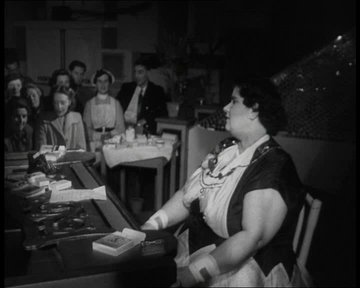
An Irishman's Diary on Musical Marie's record breaking attempt

Musical Marie was a Manchester house-wife (real name Marie Ashton) who attempted to set a new world record for non-stop piano playing in the middle decade of the 20th century. She visited Ireland on several occasions in the 1950s while trying to break the existing record. I have just written an Irishman's Diary in the Irish Times about her trips to Ireland. Read it here.

MARATHON PIANIST - British Pathé

This a short video from British Pathé from December 1954 showing Marie playing the piano in London.The things some people put themselves through!

Irish newspapers contained some interesting articles about Marie's time in Ireland. In Cork in 1959, the Irish Examiner said that 12,000 people saw her perform and that she was propped up by pillows and that her hands were bandaged. It added that a BBC crew from Belfast were on their way to Cork to record the final hours of the record-breaking attempt. I wonder if the footage is still available somewhere. The Evening Echo advertised that she would get "no sleep" and "no rest".

Did you know that during her time in Ireland that she offered to pay a fine that was imposed on some unemployed Irishmen? The Irish Times reported that in August 1953, she offered to pay the fines that  were imposed on men of the Dublin Unemployed Association. The offer was declined as the men said they would prefer to go to jail than pay a fine. 

You can also read about Marie's time in Limerick in this short article.

Monday, 1 May 2023

An Irishman's Diary on Arthur Darley

Arthur Darley was an Irish doctor who worked at the hospital set up by the Irish Red Cross in the French town of St-Lô after the Second World War. I have just written about him in the Irishman's Diary column in the Irish Times newspaper. Read it here. 

Photo of Dr Arthur Darley (right). Source 1945 Capuchin Annual.

One of Darley's colleagues at the hospital was the Irish playwright Samuel Beckett (1906-1989). While Darley tended to the patients with tuberculosis, Beckett was charged with keeping account of the hospital's supplies. They became friends and when Darley died in 1948, Beckett wrote a poem about his friend, the man with the "gleaming eye". 

If you would like to know more about the hospital in St-Lô, there is an RTÉ radio documentary on its history available here.

Monday, 20 March 2023

An Irish Diary on Peggy O'Neil

Peggy O'Neil was described in 1942 as "one of the most famous actresses of this generation", but she has been forgotten by the general public. I have just written a Diary about her in the Irish Times. Read it here.

Portrait of Peggy O'Neil. Image source.

Born in Buffallo, New York to an Irish mother, Peggy O'Neil (1898-1960), was the subject of a vaudeville song 'Peggy O'Neil' and was known across Europe and North America for her acting. 

The song said that she had "eyes as blue as skies", "walks like a sly little rouge" and "talks with a cute little brogue". Over the years, it was sung by various artists including John McCormack and Danny La Rue. This is a video of a recording by John McCormack from March 1920. Perhaps it's time for a current artist to record the song so that we can introduce Peggy O'Neil to a new generation of movie fans. 

When she died in London in 1960, her burial plot was paid for by the Actors' Benevolent Fund.

Thursday, 16 March 2023

RTÉ Brainstorm - Battling Siki in Ireland - 17 March 1923

100 years ago on 17 March 1923, the first international sport's event to take place in the newly formed Irish Free State played out in Dublin city. It was a world boxing title championship between the current holder who was a Senegalese-born Frenchman and a Clare-born boxer. I have just written about this sport's contest on the RTÉ Brainstorm website. Read it here.

View 1 - Page NP

Photo of Battling Siki in training. Image source.

Battling Siki (1887-1925) (real name Amadou M'barick Fall, also known as Louis Fall) was a larger than life individual who achieved worldwide fame when he beat the French boxer and current title holder, Georges Carpentier (1894-1975), on his home ground in France to claim the world Light heavyweight boxing championship title in September 1922. 

View 1 - Page NP

Photo of Battling Siki (center) after his win over Georges Carpentier. Image source.

Ireland was chosen as the venue for Siki (who was also referred to as 'Singular Senegalese') to defend his title after he was allegedly refused a visa to Britain. The world's press was watching closely to see if Siki could retain the title. Leading up to the fight, newspapers contained news of the preparations and some expressed fears that the Irish Civil (which was still going on at the time) could stop the match from going ahead or at least delay it. After the match, reports appeared in newspapers all over the world (as can be seen in the selection reproduced below, containing Swiss, French and American newspapers).

Siki pretending to be a boxing coach with two children on the streets of Dublin. From Swiss newspaper, L'Impartial, 19 March 1923. Image source.


Le Miroir des sports : publication hebdomadaire illustrée - View 1 - Page 177 

Front page of French sport's magazine, Le Miroir des Sports, 22 March 1923. Image source. 

Le Miroir des sports : publication hebdomadaire illustrée - View 8 - Page 184 

Inside page of Le Miroir des Sports. Image source.


Front page of the Richmond Planet, 24 March 1923. Image source. 

Description of the match in the Richmond Planet. Image source.